Project Description


"This blog is updated by the JISC funded G3 Project (#jisc3g) team. We are building an framework for teaching and communicating relevant geographic concepts and data to learners from outside the world of geography and GIS. We think this blog will be of particular interest to those working or teaching in HE and FE and those interested in teaching and learning and e-learning."

|Read more about the project |
Showing posts with label teaching GIS. Show all posts

Friday, 11 November 2011

What is the IIGLU product? (The final Product Post, not the last ever blog post)

IIGLU is more than just a piece of software!

Geographical Information Systems are hard to use – IIGLU makes them easier.

IIGLU stands for Interactive Integrated Geospatial Learning and Understanding.


This is a framework for teaching geospatial information concepts to learners outside the discipline of GIS. So how will IIGLU work for you?

Are you a teacher, lecturer or geospatial expert?
  • You will first need to develop a Use Case which will help your target audience understand geospatial concepts. Click HERE to see some examples – please feel free to make use of these yourself.

  • Once you’ve done this, you will need to build this use case into a e-learning scenario (the software environment is in alpha phase of development an will launch at the end of FEB 2012). This is a little like writing a script for a play – see HERE for examples of the preparation process and HERE for a video of how to build the scenario using the IIGLU tools.

  • The final part of your work is to bridge the gap between your scenario and a real GIS environment – you do this via the Wiki. Click HERE to see some examples of how.
Are you a learner new to geospatial / digital mapping?
  • We’ve developed a decision tool to help you find out where to start – click HERE to see how it works.
  • Links in the decision tool will take you to an e-learning environment, where you will be able to interact with maps, videos and text and learn how GIS concepts can be applied in your discipline. Click HERE to see a video of the e-learning environment
  • If you want to find out how to do the things you’ve learned about in a GIS software package such as ArcGIS, you can follow the links to the Wiki – click HERE for some examples.
Next Steps:

IIGLU is in Alpha development phase at the moment, with an expected roll out in Spring 2012.

Wednesday, 2 November 2011

Yes, it is Possible to do a PhD in GIS without including any maps (or, what makes spatial speical - Claire's view)

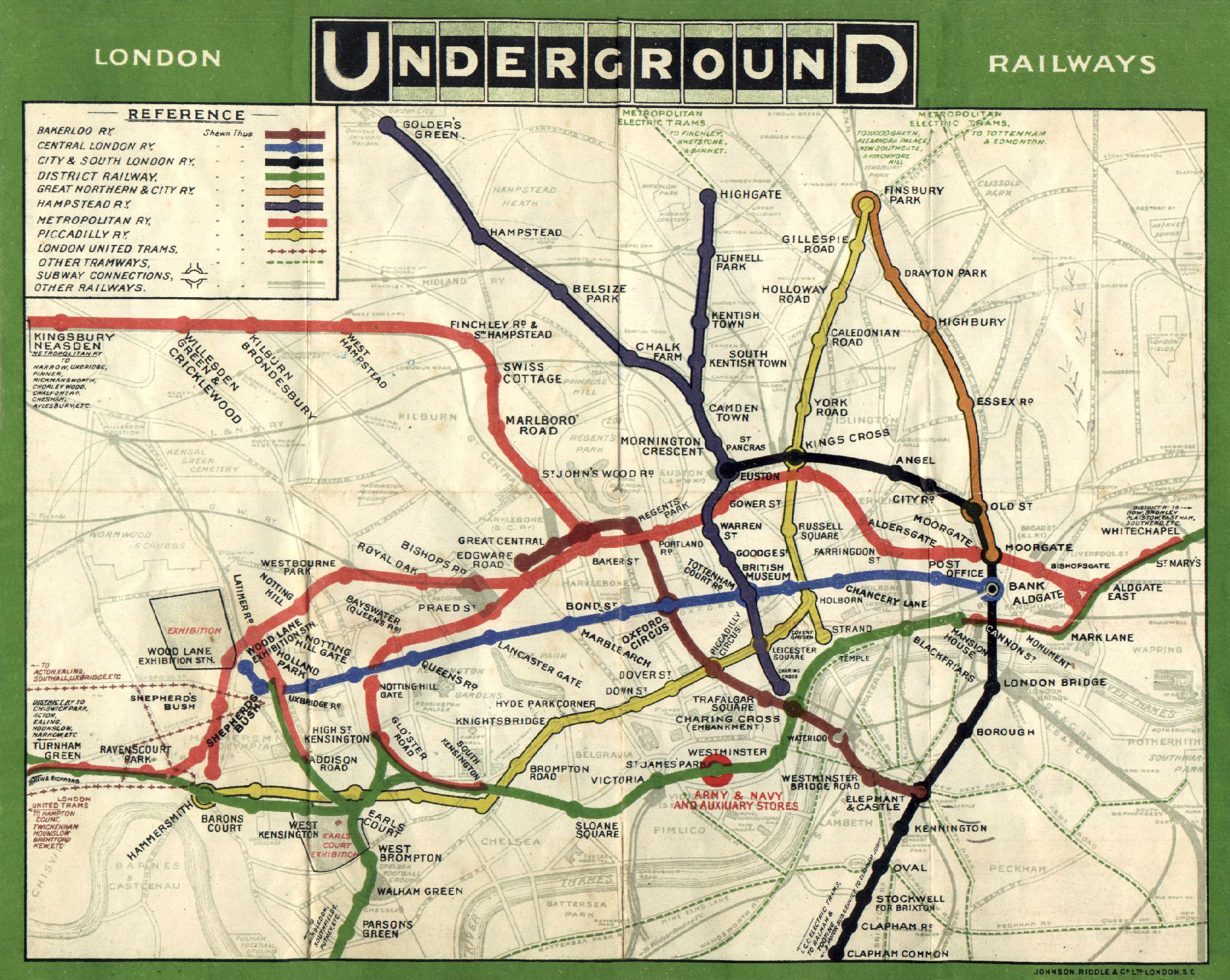
Kate's post (below this one) provides a very good insight into what makes spatial special - for her, a "picture is worth a 1000 words". When we were discussing the post, however, I thought I would also propose a complementary view. I guess my equivalent sentence would be "you may not need a map at all". Indeed, for me "spatial" would also include these:


and also these:


Working with spatial data offers a different way to understand your data that you couldn't achieve in a simple spreadsheet or text-based approach. In addition to that, 'spatial' for me goes beyond traditional geographical scales. You can look for different patterns, and answer questions such as 'what lies within 30km of here?' or 'what is next to this building?' or 'I want to build a new underground tunnel - who owns the land above me?', 'How can I get from A to B on the Underground?' If I had to list what makes spatial special, the list would focus more on what you can do with data in a GIS that you can't do elsewhere, which might include:
  • topological operations - e.g. containment, intersection, adjacency, meets, touches
  • networking operations - e.g. shortest path, travelling salesman
  • metric operations - e.g. distance, area, volume
  • topological consistency analysis - e.g. does the data have holes, slivers, undershoots and overshoots
and potentially others such as pattern detection, statistical analysis, spatio-temporal analysis and so forth. The results of this analysis may be presented as a map, but may be given in another form - a journey planner gives you a list of waypoints for your route, the population within a London Borough may be given as a number in a report.


If you think about it, Kate's view and mine have quite a bit in common, and probably reflect our different specialisations - amongst other things, Kate is a Usability and Human Computer Interaction expert, whereas my work focusses more on databases, 3D GIS and back-end programming. No doubt there are many more answers to the 'what makes spatial special' question too.


And for those of you who are interested - my PhD was about performance of topological analysis in 3D GIS. Here's an example of the visual output:


Images from:
  • http://upload.wikimedia.org/wikipedia/commons/9/90/Tube_map_1908-2.jpg
  • http://activerain.com/image_store/uploads/1/9/9/6/2/ar126056378926991.jpg
  • http://t2.gstatic.com/images?q=tbn:ANd9GcQJvI_BjNgt2QSkemv5E7X7Nparv2mb1Bpvt52aErg2C-bnsRoE0w
  • http://t0.gstatic.com/images?q=tbn:ANd9GcSbpUkXUCwxAaA6vWC04xVsAcpofaC9XbZYjF6BoPFG4OBaa7_O


Friday, 14 October 2011

What Makes Spatial Special – my (Kate’s) perspective

When I started on our master’s degree in 2003 at University College London the first week was an induction week. We were introduced to each lecturer in the department (Prof Muki Haklay, Prof Paul Longley, Jeremy Morley and Dr John Illife) and were giving an introductory series of lectures called spatial is special – I still remember them reasonably well. The notion of spatial is special is one of the first discussions included in GIS texts and introductory lectures. So, let’s consider the conventional reasons for why spatial is special, they include:

  • Geographic data is multi dimensional
  • There are lots of it – it is voluminous
  • It can be represented at multiple scales
  • It requires a projection system to turn a 3D real world into an 2D computer model or paper map
  • Special analysis techniques are required – nearest, furthest etc
  • It can be laborious and time consuming to collect, process and analyses
  • It is expensive and complex to maintain up to date geographic data
  • I t is cross –disciplinary in nature and can be used to link disciplines

(adapted from Longley, Goodchild, Maguire & Rhind (2011). Geographical Information Systems and Science, John Wiley and Sons: Chichester)

This is the technical response, but there is an emotive reason behind why spatial is special, and for me it is related to the age old adage “A picture tells a 1000 words”. Here in Portsmouth I teach to undergraduates in lectures with 200 students. I see my job as inspiring enthusiasm for exploring issues in human geography and I do this by finding relevant maps, images and TED talks to bring subjects/sub-disciplines to life.

For reasons unbeknown to me, there is a consensus amongst our undergraduate cohort that they don’t like GIS/ Geospatial data/ making maps. This bothers me, I am a map geek and I hope to inspire them to change their mind. So, even if the students don’t remember my name, they know me as the one that uses a map(s) in every lecture. Why do I do this? Good maps bring abstract concepts, theory and data to life. They help stimulate the imagination and aid knowledge production. They simplify and generalise complex issues in ways that members of the public and new learners can understand. It is inconceivable for me to imagine giving a lecture on migration without the aid of maps to illustrate movement.

How do I benchmark a successful lecture with 200 students? Students are not fiddling with their phones, whispering to each other, falling asleep or slouched in their seats. If they are engaged, attentive and interested it shows on their faces and in their posture. Last year, I remember giving a lecture on the subject an “Introduction to GIS and health”. There are so many powerful maps that can be used in this subject area, examples include:

  • John Snow’s map of Cholera
  • Changes in life expectancy as you travel from tube stop to tube stop
  • Patterns of malaria across Africa
  • Sptaial-temporal maps of population differences
  • Noise mapping in low income neighbourhoods of London
  • Mapping Internally Displaced People (IDP) in Haiti
  • Cartograms of population to reveal inequalities


When such maps are used in lectures to illustrate and communicate concepts and bring geographic data to life – the reward is a positive student reaction and a realisation that maps are useful. This is particularly evident if lectures reflect real world issues in the news. This lecture was delivered this year at the time of the during this lecture we also discussed the Fukushima nuclear accident in Japan – highlighting health issues of such a crises and then looked at how different maps and mapping hacks of the incident could be used to explore at risk population groups. This type of linking between maps and real world issues bring to the fore the potential of geospatial applications for decision-making and problem solving issues in human geography.


Tuesday, 5 July 2011

Prioritising Geographic Concepts for Teaching New Learners GIS: results from our blog poll

We asked readers of the blog to identify the priority of teaching certain Geographic Concepts to new users whilst quite a few people viewed the questions only 21 readers completed the poll. Firstly, I would like to thank the blog readers who completed our quick survey. The table below summarises the concepts that we used in the poll. A graph at the bottom of the blog post shows the results.

Geographic Concept

Details

Example

Beginning mapping

importance of location

zoom, pan, layers

Geographic data modelling

raster versus vector

Points, Lines, Polygons and Pixels....

Cartographic theory

fundamental principles of cartography

simplicity, harmony, no map junk ...

Data generalisation

introduction of types of and need for generalisation

Simplification, Selection, Omission, Displacement, Aggregation...

Data classification

introduction to data classification rules and type of classification

Natural Breaks, Quintiles, Geometric Progressions ...

Mapping conventions

elements that enhance user understanding of the map

scale bar, legend, north arrow, symbology....

Simple spatial analysis

introducing simple analysis computed using GIS

buffer, distance, overlay....

Uncertainty in geographic data

Impact of uncertainty on data

Modifiable Areal Unit Problem, ecological fallacy


With such a small N we do not have a any statistically valid results but what we do have is some useful thoughts that support the thinking of the project team and the development of the scenarios and resulting site development.

We asked readers to prioritise the concepts based on a linear scale of 1 to 5, where a score of 1 represented a concept that was not relevant to new learners and a score of 5 signified a must teach concept for new users. Using these values, I have calculated a quick and dirty Score of Importance for each of the priorities, see the graph at the bottom. This score alongside the free text comments helps us to identify quickly what our readers think are the most important concepts to teach new learners of GIS.

Results :

  • All of the concepts are relevant for new users of GIS to learn – but the timing of when they are introduced is what is most important
  • The most important concept is associated with beginning mapping and why spatial is special
  • New users need to be aware of the issues that result because GI models are simply an abstraction of reality and they need to be familiar with how reality is represented using data models.
  • Principles and practical cartography were rated (slightly) more important to teach before introducing simple spatial analysis and uncertainty
  • The details of datums and map projections are beyond the scope but it is important for users to recognise the internal bias that may result from a map projection

Sunday, 19 June 2011

Reflective Teaching Practice: Do I need to know there is such a thing as a map projection?

Myself and Claire have just arrived back from the Island of Malta, where we both participate in the International Summer School in GIS held at the University of Malta. We both design and deliver lecture material targeted at professionals who are discovering how GIS maybe useful.

We were discussing our observations of the students and how they learn and interact with the GIS software and its theoretical principles.

One subject up for debate was, "do new learners of GIS and its concepts need to know immediately about projections?" There is a tendency to be puritanical about what concepts new learners of GIS need to understand putting aside this tendency, our conclusion was: “Not necessarily”.

Let me explain. Most everyday users of Bing Maps, Google Maps etc interact with the map quite happily without needing to know that a projection system makes it possible to create the digital representations of the world. The same can be said for users of navigation systems in cars or on phones.

Therefore, it is only natural that a new user of GIS, creating their first map using off the shelf Shape files or MapInfo Tabs (for example taken from Edina’s Digimap service), does not need their first interaction to introduce the complexities of coordinate systems that enable real world to be projected in 2 dimensions. It is only when their data they want to map is not GIS ready that they need to be introduced to a projection system.