- Delivering Feedback as Part of a Game Environment. Users will be able to step through the tutorials and as they complete tasks the system will deliver personalised feedback based on how successfully they completed it. This will be achieved via the use of a weights matrix (defined during user testing) that stores a tolerance ratio, which is the difference between the tutorial state of the teachers actions and the state of the learners interactions. So if the teacher writing the scenario asks the student to create a buffer that is 10m from the point of interest and the user types 15m they will be given points for drawing a buffer but not full points because the distance was wrong.
- Tutorial State Tracking & Usability Analysis for Indepth User Understanding: The recording of user interactions with the map tutorial state will enable us to explore how users are interacting with the tutorials and inform further usability analysis and understanding.
Pages
Project Description
"This blog is updated by the JISC funded G3 Project (#jisc3g) team. We are building an framework for teaching and communicating relevant geographic concepts and data to learners from outside the world of geography and GIS. We think this blog will be of particular interest to those working or teaching in HE and FE and those interested in teaching and learning and e-learning."
|Read more about the project |
Thursday, 10 November 2011
Thoughts on how the IIGLU e-learning environment can be further developed in the Future
Project Blog Posts - Table of Contents
- 11/what-is-iiglu-product-final-product.html: Product description of IIGLU framework
- 11/iiglu-elevator-pitch.html: Elevator Pitch for IIGLU framework
- 02/project-plan-post-5-of-7-project-team.html: Project team
- 11/iiglu-our-logo.html : Developing a brand for our product
- 11/thoughts-on-how-iiglu-e-learning.html: Futures ideas for development of the e-learning environment
- 09/iiglu-how-usable-will-it-be.html: Discussion on how usable will the e-learning component of the IIGLU framework be, with screen cast
- 08/development-update.html: Development update in the form of a screen cast
- 06/decision-time-google-maps-vs-openlayers.html :Discussion on which development environment we should use
- 05/g3-few-months-in.html: Progress report
- 02/project-plan-post-3-of-7-risk-analysis.html: Analysis of project risks
- 02/project-plan-post-2-of-7-benefits-to.html: Benefits of the project
- 02/beyond-g3-project.html: Thinking ahead about after the project
- 02/project-outline.html: Description of the G3 project
- 08/what-is-todays-equivalent-to-jon-snows.html: Thoughts on the modern day equivalent of the John Snow Map
- 08/open-geo-health-workshop.html : Exploring issues of GIS in Health Care
- 05/if-gis-were-language.html: User interviews raised the question of whether you need to understand the language of GIS to grasp map making?
- 05/importance-of-knowing-location.html: User Interviews with stressed the importance of teaching non technical disciplines the power of knowing a location - which can be digitally mapped
- 04/gis-not-spss.html: Undergraduate consider SPPS and GIS to be the same quantitative skillset
- 03/urban-design-user-expert-interview.html: Summary of user interview using a Word Cloud
- 03/congratulate-me-im-data-scientist.html: Thinking about new roles as data scientists
- 02/background-narrative-for-g3-bridging.html: Summary of our typical user , a use case
Understanding User Interactions with Geographic Information and GIS
- /07/just-quick-pointer-to-recording-of-my.html : Presentation of eye tracking experiments given at State of The Map, Vienna.
- 07/gis-are-still-hard-to-use-interface.html : Discussion on notoriety of desktop GIS and how difficult they are to use
- 07/state-of-map-presentation.html : Summary of the Presentation given at State of The Map
- 05/moving-search.html: Example of the Eye Tracking Experiments
- 05/child-of-ten-standard-of-user-interface.html: discussion on usability from the perspective of a child of 10.
Teaching and Learning Geographic Information
- 11/yes-it-is-possible-to-do-phd-in-gis.html : Claire's thoughts on Spatial is Special
- 10/what-makes-spatial-special-my-kates.html: Kate's thoughts on Spatial is Special
- 07/reflective-teaching-practice-2-do-i.html : Thoughts on teaching spatial databases
- 07/we-asked-readers-of-blog-to-identify.html: Results of questionnaire posted on blog asking about prioritising geographic concepts for new learners
- 06/metaphor-for-introducing-teaching-map.html: Using metaphors to teach map projections
- 06/reflective-teaching-practice-do-i-need.html: Thoughts on teaching map projections
- 05/is-gis-discipline-or-inter-discipline.html: Thoughts on the state of GIS as a discipline
- 05/quick-question-on-geographic-concepts.html: Questionnaire post on blog asking readers how they would prioritise geographic concepts for new learners
- 05/important-geographic-and-cartographic.html:
- 02/representations-of-scale.html: Thoughts on use of scale in scenario development
IIGLU - The Elevator Pitch!
Geographical Information Systems (GIS) are hard to use – IIGLU makes it easier. IIGLU is an interactive online framework to support learning and teaching of geographic and GIS concepts. Thursday, 3 November 2011
IIGLU - our logo

We came up with the name as a take on the word Igloo because it is made of large building blocks which represent the steps of understanding in our framework. As you complete each step you build your understanding of the concepts that underpin digital mapping (desktop and web based). Also an igloo is sort of shaped like a globe, and this project is about geography and digital mapping so we wanted to incorporate a globe into the design.
As part of the frame work we are developing a tool to support new learners : for more information have a look at the post : an IIGLU is born.
Hope you like it!
Wednesday, 2 November 2011
Yes, it is Possible to do a PhD in GIS without including any maps (or, what makes spatial speical - Claire's view)
- topological operations - e.g. containment, intersection, adjacency, meets, touches
- networking operations - e.g. shortest path, travelling salesman
- metric operations - e.g. distance, area, volume
- topological consistency analysis - e.g. does the data have holes, slivers, undershoots and overshoots
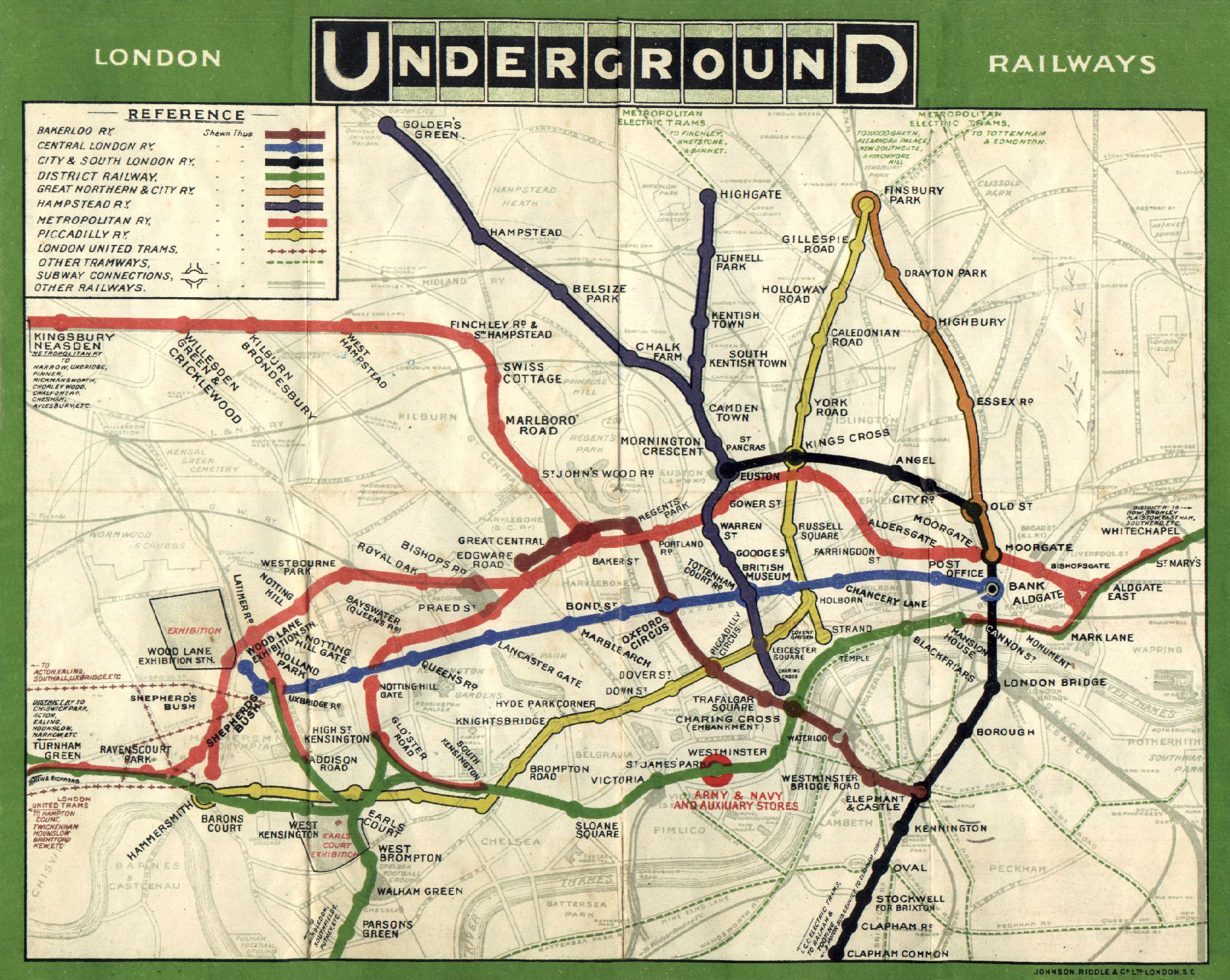
- http://upload.wikimedia.org/wikipedia/commons/9/90/Tube_map_1908-2.jpg
- http://activerain.com/image_store/uploads/1/9/9/6/2/ar126056378926991.jpg
- http://t2.gstatic.com/images?q=tbn:ANd9GcQJvI_BjNgt2QSkemv5E7X7Nparv2mb1Bpvt52aErg2C-bnsRoE0w
- http://t0.gstatic.com/images?q=tbn:ANd9GcSbpUkXUCwxAaA6vWC04xVsAcpofaC9XbZYjF6BoPFG4OBaa7_O
Friday, 14 October 2011
What Makes Spatial Special – my (Kate’s) perspective
When I started on our master’s degree in 2003 at University College London the first week was an induction week. We were introduced to each lecturer in the department (Prof Muki Haklay, Prof Paul Longley, Jeremy Morley and Dr John Illife) and were giving an introductory series of lectures called spatial is special – I still remember them reasonably well. The notion of spatial is special is one of the first discussions included in GIS texts and introductory lectures. So, let’s consider the conventional reasons for why spatial is special, they include:
- Geographic data is multi dimensional
- There are lots of it – it is voluminous
- It can be represented at multiple scales
- It requires a projection system to turn a 3D real world into an 2D computer model or paper map
- Special analysis techniques are required – nearest, furthest etc
- It can be laborious and time consuming to collect, process and analyses
- It is expensive and complex to maintain up to date geographic data
- I t is cross –disciplinary in nature and can be used to link disciplines
(adapted from Longley, Goodchild, Maguire & Rhind (2011). Geographical Information Systems and Science, John Wiley and Sons: Chichester)
This is the technical response, but there is an emotive reason behind why spatial is special, and for me it is related to the age old adage “A picture tells a 1000 words”. Here in Portsmouth I teach to undergraduates in lectures with 200 students. I see my job as inspiring enthusiasm for exploring issues in human geography and I do this by finding relevant maps, images and TED talks to bring subjects/sub-disciplines to life.
For reasons unbeknown to me, there is a consensus amongst our undergraduate cohort that they don’t like GIS/ Geospatial data/ making maps. This bothers me, I am a map geek and I hope to inspire them to change their mind. So, even if the students don’t remember my name, they know me as the one that uses a map(s) in every lecture. Why do I do this? Good maps bring abstract concepts, theory and data to life. They help stimulate the imagination and aid knowledge production. They simplify and generalise complex issues in ways that members of the public and new learners can understand. It is inconceivable for me to imagine giving a lecture on migration without the aid of maps to illustrate movement.
How do I benchmark a successful lecture with 200 students? Students are not fiddling with their phones, whispering to each other, falling asleep or slouched in their seats. If they are engaged, attentive and interested it shows on their faces and in their posture. Last year, I remember giving a lecture on the subject an “Introduction to GIS and health”. There are so many powerful maps that can be used in this subject area, examples include:
- John Snow’s map of Cholera
- Changes in life expectancy as you travel from tube stop to tube stop
- Patterns of malaria across Africa
- Sptaial-temporal maps of population differences
- Noise mapping in low income neighbourhoods of London
- Mapping Internally Displaced People (IDP) in Haiti
- Cartograms of population to reveal inequalities
When such maps are used in lectures to illustrate and communicate concepts and bring geographic data to life – the reward is a positive student reaction and a realisation that maps are useful. This is particularly evident if lectures reflect real world issues in the news. This lecture was delivered this year at the time of the during this lecture we also discussed the Fukushima nuclear accident in Japan – highlighting health issues of such a crises and then looked at how different maps and mapping hacks of the incident could be used to explore at risk population groups. This type of linking between maps and real world issues bring to the fore the potential of geospatial applications for decision-making and problem solving issues in human geography.
Monday, 12 September 2011
IIGLU - how usable will it be?
In a previous blog post I discussed the Child of 10 usability standard. The idea behind which is that a child of 10 can do something in 10 minutes. We have considered this standard throughout the development of the IIGLU application. What you see in the sneeky preview is prior to the CSS and the interface design scripting. Patrick, our developer is working on this as we speak.
For students using IIGLU it will be straightforward and intuitive to use without requiring any help documentation or instructions. Students should be able to log in, select a scenario or geographic concept and then work their way through the tutorial steps using a simple next or back button. Simplicity is the underlying premise. We have placed priority on the user friendly development of this component.
We have also given priority to the geospatial concepts and knowledge building process and not to the complex interactions with the map. Therefore, 3 types of multimedia are currently supported: HTML, Map, and You Tube Video. So there is this great video from the TV series West Wing all about the distortions that result from map projections: it is the perfect way to introduce new learners to map projections (see previous post on reflections of teaching map projections). The e-learning environment will enable complex geospatial concepts to be presented without the frustrating interactions required with learning with a desktop GIS.